
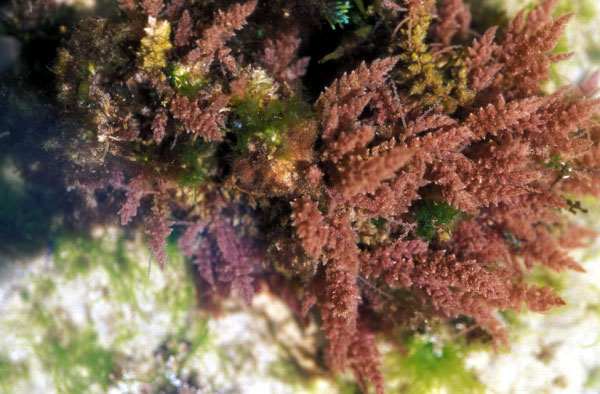
Gracilaria Cultivation Can Provide Bioremediation In Chinese Mariculture

Error message

  • Warning: ini_set(): Headers already sent. You cannot change the session module's ini settings at this time in drupal_environment_initialize() (line 695 of /home4/tassusac/public_html/marineagronomy/includes/bootstrap.inc).
  • Warning: ini_set(): Headers already sent. You cannot change the session module's ini settings at this time in drupal_environment_initialize() (line 696 of /home4/tassusac/public_html/marineagronomy/includes/bootstrap.inc).
  • Warning: ini_set(): Headers already sent. You cannot change the session module's ini settings at this time in drupal_environment_initialize() (line 697 of /home4/tassusac/public_html/marineagronomy/includes/bootstrap.inc).
  • Warning: ini_set(): Headers already sent. You cannot change the session module's ini settings at this time in drupal_environment_initialize() (line 700 of /home4/tassusac/public_html/marineagronomy/includes/bootstrap.inc).
  • Warning: ini_set(): Headers already sent. You cannot change the session module's ini settings at this time in drupal_environment_initialize() (line 702 of /home4/tassusac/public_html/marineagronomy/includes/bootstrap.inc).
Abstract: 

Large-scale Gracilaria cultivation can be an effective means of improving water quality and promoting a more sustainable mariculture industry in China. In tests, the seaweed Gracilaria lemaneiformis provided several beneficial functions. It was very effective in decreasing nitrogen and phosphorus loadings. The seaweed was also able to inhibit the growth of some microalgae and may increase dissolved oxygen in the water column.


Author(s): 
Dr. Yufeng Yang
Dr. Charles Yarish
Article Source: 
January/February 2011 global aquaculture advocate
Category: 
Aquaculture methods
Microalgae