
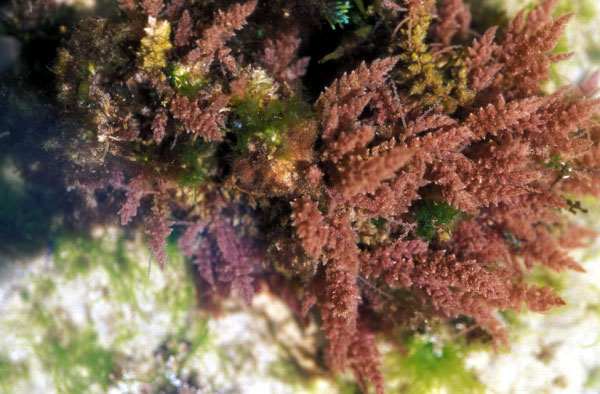
Macroalgae as a Biomass Feedstock: A Preliminary Analysis
The Energy Independence and Security Act of 2007 (EISA) mandates the increased supply of alternative fuels meeting the Renewable Fuel Standard. This requires fuel sold in the U.S. to contain a minimum of 36 billion gallons of renewable fuels, including advanced and cellulosic bio-fuels by 2022. The U.S. Department of Energy (DOE) has set a goal in its Strategic Plan to promote energy diversity and independence. In particular, the DOE Energy Efficiency and Renewable Energy (EERE) Biomass Program supports four key priorities: 1) reduce dependence on foreign oil, 2) promote diverse, sustainable, domestic energy resources, 3) reduce carbon emissions and 4) establish a domestic biomass industry (EERE, 2010)
Meeting the EISA renewable fuels goals requires development of a large sustainable supply of diverse biomass feedstocks from across the country. Macroalgae could be a potential contributor towards this goal. This resource would be grown in marine waters and would not compete with existing land-based energy crops. The amounts of macroalgae that could be available as a biomass feedstock are potentially high, but very little analysis has been done on this resource. This project provides information needed to assess the development of macroalgae as a feedstock for the biofuels industry.



Marine Agronomy Group, CAFNRM, UH-Hilo
200 W. Kawili st., HI 96720, USA
Contact: Marine.Agronomy.Group@gmail.com
Funding for this web portal is provided by the World Wildlife Fund and the University of Hawaii-Hilo.