
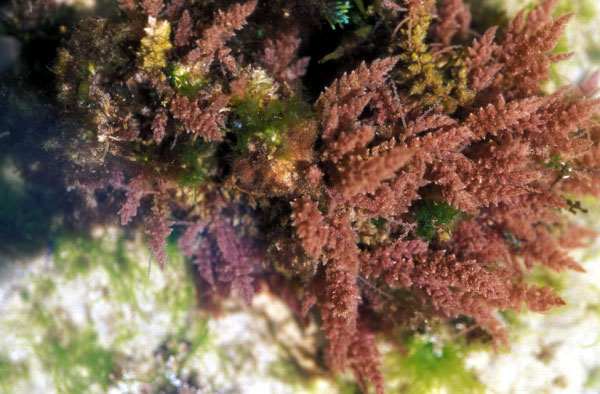
New York pilot project shows seaweed "thrives and cleans" in polluted waters

Error message

  • Warning: ini_set(): Headers already sent. You cannot change the session module's ini settings at this time in drupal_environment_initialize() (line 695 of /home4/tassusac/public_html/marineagronomy/includes/bootstrap.inc).
  • Warning: ini_set(): Headers already sent. You cannot change the session module's ini settings at this time in drupal_environment_initialize() (line 696 of /home4/tassusac/public_html/marineagronomy/includes/bootstrap.inc).
  • Warning: ini_set(): Headers already sent. You cannot change the session module's ini settings at this time in drupal_environment_initialize() (line 697 of /home4/tassusac/public_html/marineagronomy/includes/bootstrap.inc).
  • Warning: ini_set(): Headers already sent. You cannot change the session module's ini settings at this time in drupal_environment_initialize() (line 700 of /home4/tassusac/public_html/marineagronomy/includes/bootstrap.inc).
  • Warning: ini_set(): Headers already sent. You cannot change the session module's ini settings at this time in drupal_environment_initialize() (line 702 of /home4/tassusac/public_html/marineagronomy/includes/bootstrap.inc).
Abstract: 

Since 2011, Dr. Charles Yarish and colleagues have experimented with growing seaweed on long lines at the head of New York's Bronx River Estuary, along with ribbed mussels suspended from a raft. They have raised a summer crop of the native red seaweed, Gracilaria tikvahiae, that grew up to 16.5% a day in July and a winter crop of sugar kelp, Saccharina latissima, that grew up to 8 feet in six months. Yarish says he has been surprised by the profigious growth in an area with low salinity and an overload of "a suite of nutrients" from a nearby waste water treatment plant and non-point runoff from the land and river. 

Author(s): 
Muriel L. Hendrix
Article Source: 
Aquaculture North America
Category: 
Aquaculture methods
Geography
Processing methods